From your first English class to conversations at cafés, work and home, discover how to make everyday life part of your language-learning journey.
Moving to Australia is an exciting opportunity. You get to experience a new country, meet people from different cultures, explore new places and develop skills that can change your future.
For many international students, one of the biggest goals is to improve their English communication skills. You might want to speak confidently with Australians, understand conversations at work, make new friends, study at university or simply feel more comfortable in everyday situations.
But learning English can sometimes feel challenging. You may understand English when someone speaks slowly, but struggle when Australians speak quickly. You might know plenty of vocabulary but find it difficult to form sentences. Or perhaps you feel nervous about speaking because you’re worried about making mistakes.
If this sounds familiar, you’re certainly not alone. The good news is that you don’t need perfect English to start communicating confidently. You need the right learning plan, consistent practice and the willingness to use English in everyday life.
At Boston Institute Sydney, we believe learning English should go beyond textbooks and classrooms. Real progress can happen when structured English lessons are combined with everyday communication.
1. Join a General English course that gives you a clear learning plan
One of the most effective ways to begin improving your English is to join a structured General English course. Many students try to learn English entirely by themselves, watching random videos, downloading language apps or memorising vocabulary without a clear direction. Although these activities can help, learning without a structured plan can make it difficult to identify weaknesses or measure progress.
A good English language school should help you understand:
- Your current English proficiency level
- Your strengths and weaknesses in speaking, listening, reading and writing
- The communication skills you need to improve
- The grammar and pronunciation areas that need attention
- Your short-term and long-term learning goals
- How progress will be assessed over time
For example, a beginner may need to focus on everyday vocabulary, sentence construction and basic conversations. An intermediate student might need more support with fluency, pronunciation, listening comprehension and expressing opinions. An advanced student may benefit from natural conversation, professional communication and more complex language structures.
Your learning journey should be based on your current level and personal goals, not simply the number of weeks you spend studying.
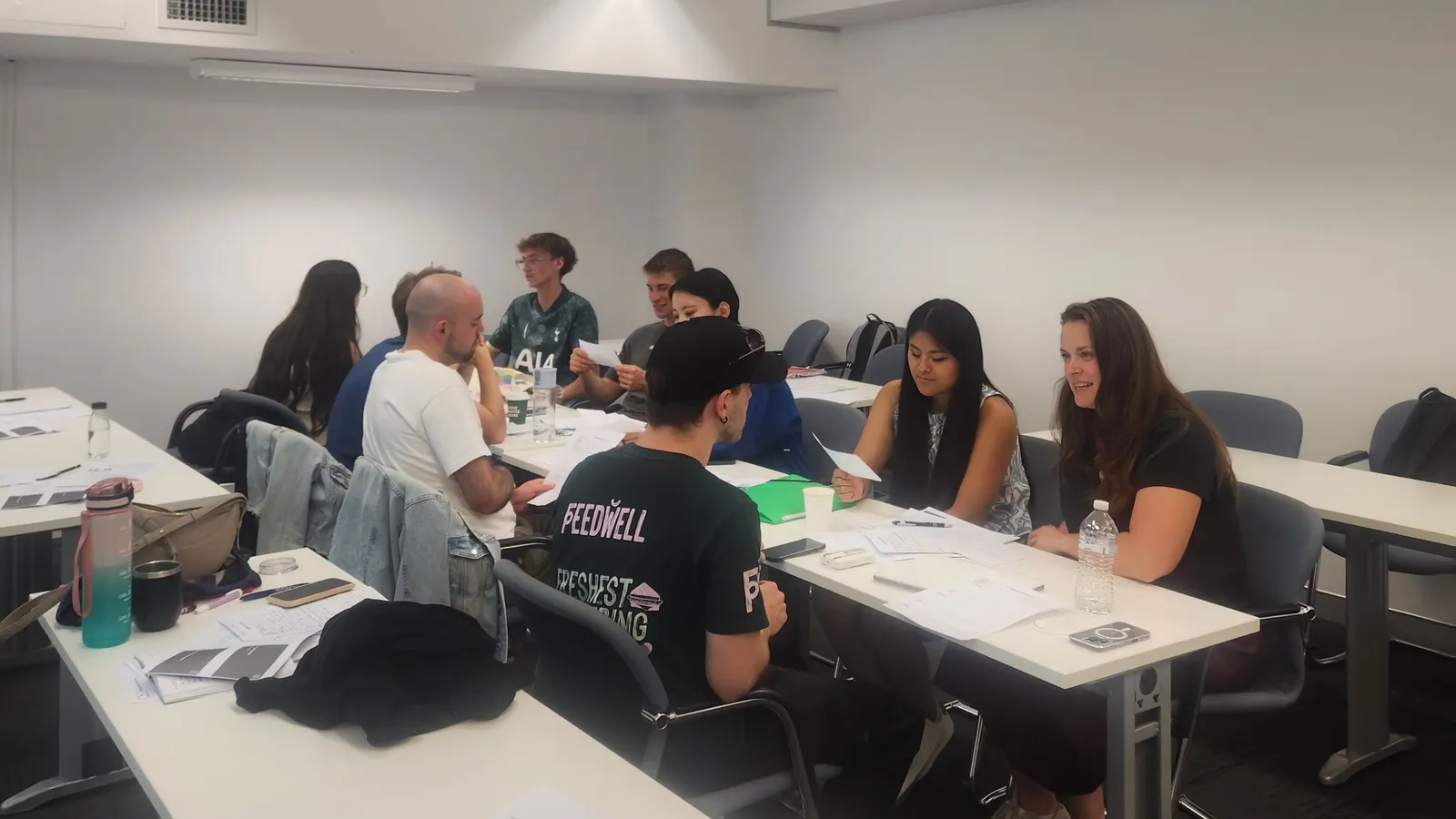
At Boston Institute Sydney, our General English program is designed to develop speaking, listening, reading, writing and grammar skills through structured lessons, classroom activities and feedback. Not sure where you are starting from? Our free English level test gives you an estimated level in a few minutes.
2. Make English a part of your everyday life in Australia
One of the biggest advantages of studying English in Australia is that you’re surrounded by opportunities to practise. Every café, supermarket, train station, workplace and social gathering can become part of your learning experience. But simply living in an English-speaking country does not automatically improve your skills. You have to actively use those opportunities.
- Order coffee in English rather than pointing at the menu.
- Ask supermarket staff where to find something.
- Start small conversations with classmates.
- Ask for directions instead of immediately using your phone.
- Speak with neighbours when the opportunity arises.
- Attend local community events.
- Practise explaining your day to a friend in English.
Imagine visiting a café and saying: “Hi, could I please have a large cappuccino with oat milk?” The barista might reply: “Sure! Would you like that takeaway or have here?” This small interaction helps you practise listening, responding naturally and understanding expressions used in Australia.

Australia is not just where you study English. It can also be your everyday English classroom.
3. Start thinking in English instead of translating everything
Many English learners first think in their native language, translate their thoughts into English and then try to speak. This process can slow down conversations and make speaking feel stressful.
Instead, gradually train yourself to think directly in English. Start with simple thoughts throughout your day:
- When you wake up: “What do I need to do today?”
- While getting ready: “I need to leave home in 20 minutes.”
- While travelling: “I hope the train arrives on time.”
- Before bed: “Today was a good day. I learned something new.”
You can describe what’s happening around you: “I’m sitting on the train. There are many people around me. I’m going to the city for my English class.” Short sentences are a great start. As your confidence grows, try expressing longer thoughts.
4. Practise self-talk in English every day
You don’t always need a speaking partner. Self-talk can be especially helpful if you feel nervous speaking in front of others. You can practise while walking, cooking, cleaning, getting ready for work or spending time alone.
For example: “I’m preparing dinner. First, I’m going to cut the vegetables. Then I’ll cook the rice.” Or: “This weekend, I’m planning to visit Bondi Beach. I want to go early because the weather might be nice.”
Practise answering imaginary questions:
- Can you tell me a little about yourself?
- What do you enjoy doing in your free time?
- Why did you decide to come to Australia?
- What are your future plans?
Try speaking for five minutes without stopping. If you forget a word, explain it using other words rather than immediately switching languages. This helps you form sentences and organise your thoughts in English.
5. Watch English movies, TV shows and YouTube videos
Movies, TV shows, interviews, podcasts and YouTube videos expose you to different accents, vocabulary and expressions. The trick is to watch actively rather than only for entertainment.
- 1Watch with English subtitles. Choose a short scene and connect spoken words with written language.
- 2Write down useful expressions. Find three to five phrases you could use in conversations.
- 3Watch the scene again. Focus on pronunciation, rhythm and connected speech.
- 4Repeat aloud. Pause and copy the speaker’s pronunciation and intonation. This is often called shadowing.
- 5Summarise it. Explain the main idea in your own words.
Beginners can start with slower, shorter content. As you improve, move towards interviews, news discussions and longer podcasts. You don’t need to understand every word; focus on the main message.
6. Speak English with people outside your own language group
Australia is multicultural, and it’s natural to make friends who share your first language. Those friendships are valuable. However, speaking only your native language all day can reduce your English practice opportunities.
Try meeting classmates from other countries, joining sports or hobby groups, attending local activities or participating in language exchanges. You could agree with friends to have an English-only conversation hour each day. It may feel uncomfortable at first, but those real conversations can help build confidence.
7. Learn everyday English expressions used in Australia
Textbook English and casual spoken English aren’t always the same. Learning common Australian expressions can make conversations easier to understand.
| Australian English | Meaning |
|---|---|
| How’s it going? | How are you? |
| No worries | That’s okay / No problem |
| Arvo | Afternoon |
| Brekkie | Breakfast |
| Keen | Interested or enthusiastic |
| Cheers | Thanks, or a casual farewell |
| Mate | Friend, or an informal way to address someone |
For example, “Are you keen to grab a coffee this arvo?” means “Would you like to get a coffee this afternoon?” You don’t have to use slang in every conversation. Focus on understanding it and recognising when casual or formal English is more appropriate.

8. Ask questions and clarify your doubts with your English teacher
One of the greatest benefits of face-to-face English classes is access to a teacher who can guide you. If something is unclear, ask. You might be confused about grammar, pronunciation, vocabulary or the meaning of an expression.
Useful classroom questions include:
- “Could you explain that again, please?”
- “What’s the difference between these two words?”
- “Is this sentence grammatically correct?”
- “How would someone normally say this in conversation?”
- “Could you give me another example?”
- “Can you help me with my pronunciation?”
Rather than memorising a rule without understanding it, ask your teacher to show you how it’s used. For example, the difference between “I have lived in Sydney for two years” and “I lived in Sydney for two years” becomes clearer with real examples.
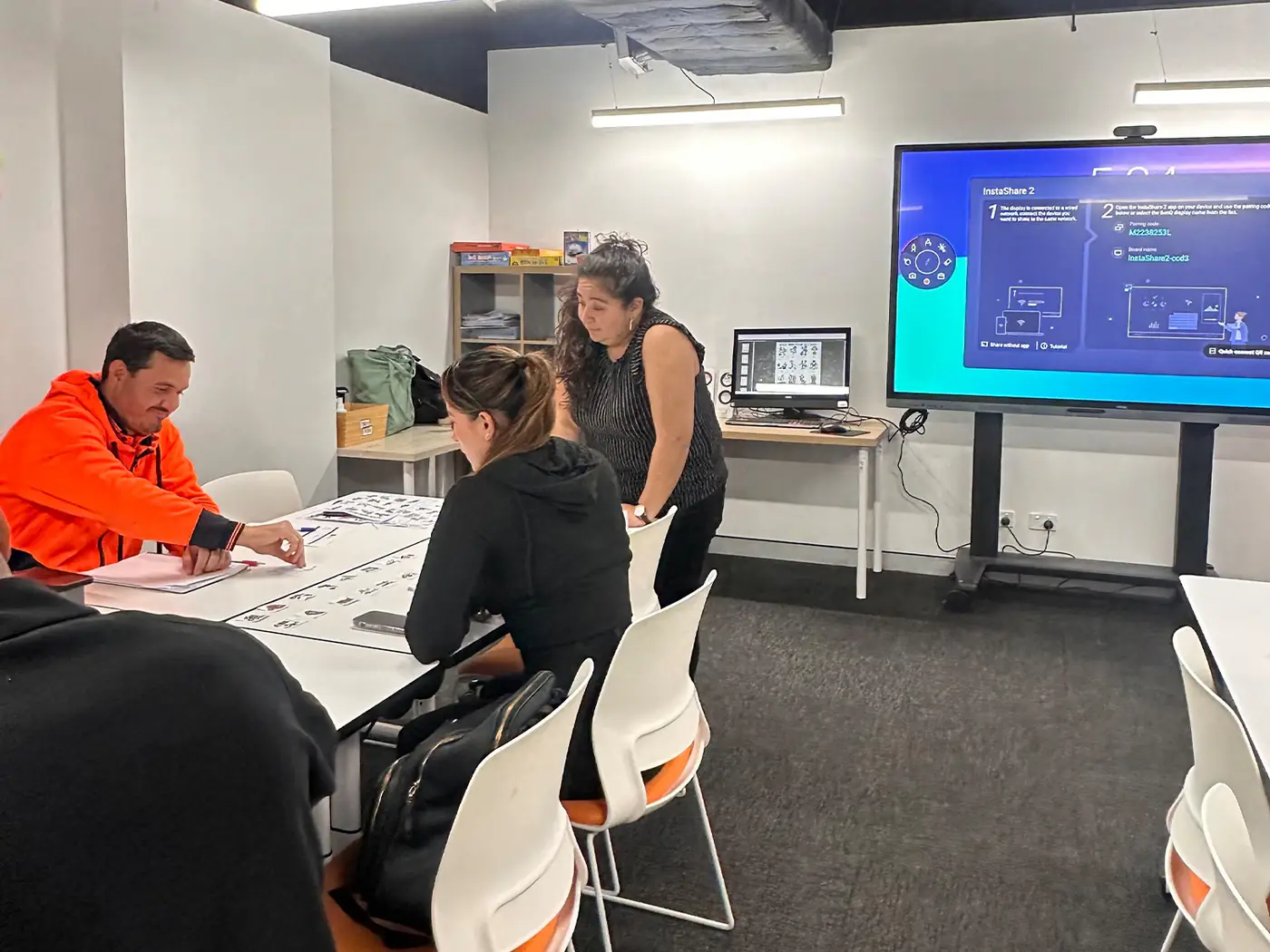
At Boston Institute Sydney, we encourage active classroom participation, questions and using feedback to improve communication.
9. Build vocabulary you can actually use
Memorising long lists isn’t always the best approach. Instead, prioritise words and expressions you regularly need: shopping, transport, accommodation, healthcare, work, education, making friends and interviews.
Don’t just memorise “appointment”; learn “I’d like to book an appointment for tomorrow afternoon.” Don’t just memorise “available”; practise “Are you available to meet after class?”
Keep a notebook or digital list and aim to learn five useful expressions a day. Review them regularly and try using them in conversations. The goal isn’t to know thousands of words that you never use, but to develop vocabulary that helps you communicate.
10. Record yourself speaking English
Recording yourself is an easy way to spot progress and identify areas that need attention.
- 1Choose a topic, such as your hobbies, work or weekend plans.
- 2Record yourself speaking for one or two minutes.
- 3Listen and notice hesitations, pronunciation and sentence structure.
- 4Practise the difficult parts.
- 5Record the same topic again and compare.
Repeat weekly. You may find you’re speaking more smoothly, using longer sentences and pausing less. You can also ask your teacher for feedback. Fluency isn’t about having a perfect accent; it’s about clear and confident communication.
11. Use AI and technology as your personal English practice partner
AI conversation assistants and language-learning apps can complement classroom lessons with extra practice, especially when you don’t have a speaking partner nearby. Try these English practice prompts:
- At a café: “Act as a café worker in Sydney. I want to practise ordering coffee in English. Ask me questions one at a time and correct my mistakes after the conversation.”
- Daily conversation: “I’m an intermediate English learner. Ask me five questions about my daily routine and suggest more natural ways to answer.”
- At work: “Help me practise polite English for asking my manager a question about my shift.”
You can also practise job interviews, pronunciation, grammar, emails, picture descriptions and expressing opinions. AI feedback can sometimes be incorrect, so treat it as additional practice rather than a replacement for experienced teacher feedback and real conversations.
12. Set small goals and measure your English progress
“I want to speak English fluently” is a great ambition, but it can feel overwhelming. Break it into smaller goals:
- Week 1: Introduce yourself and talk about your daily routine.
- Week 2: Order food, ask questions and manage simple conversations.
- Week 3: Speak about past experiences and future plans.
- Week 4: Hold a five-minute conversation about a familiar topic.
These are illustrative goals, not guaranteed outcomes. Progress depends on your starting level, habits and practice time. Ask yourself: Can I speak for longer? Am I understanding more? Do I feel comfortable asking questions? Am I using new vocabulary naturally? Celebrate the small improvements.
Your daily 30-minute English improvement plan
Even 30 minutes of focused practice outside regular classes can help you build better habits.
| Activity | Daily time |
|---|---|
| Listen to a podcast or short video | 10 minutes |
| Practise speaking or self-talk | 10 minutes |
| Learn and review useful vocabulary | 5 minutes |
| Write a short English journal entry | 5 minutes |
| Total | 30 minutes |
In class, focus on learning new concepts, practising with classmates and receiving feedback. Outside class, focus on using what you’ve learned.
What should you avoid when learning English?
Waiting until your English is perfect before speaking
You improve speaking skills by speaking. Mistakes are part of learning.
Only studying grammar without practising conversation
Knowing grammar rules doesn’t automatically make communication easy. Use the rules in real speech.
Translating everything from your native language
Practise thinking directly in English, starting with short sentences.
Avoiding conversations because of embarrassment
Don’t let fear of mistakes prevent you from participating.
Using only one learning method
Combine lessons, listening, speaking, reading, writing and independent practice.
Comparing yourself with other students
Everyone learns at a different pace. Focus on your own progress.
Why studying General English in Sydney can be a great opportunity
Sydney provides a wide range of opportunities to practise English: studying, travelling, shopping, attending events and meeting people from different backgrounds. Making the most of that environment means participating rather than just being present.
Start conversations, explore activities and practise what you learn. If you study how to ask for directions, use that skill in the city. If you learn food vocabulary, try it at a restaurant. If you practise discussing work, have a conversation about someone’s career. Everyday experiences help connect classroom English with practical communication.

Study General English at Boston Institute Sydney
Looking for a General English course in Sydney? Boston Institute provides a supportive learning environment for international students and adults who want to improve their everyday English skills. Located in Sydney CBD, Boston Institute offers structured English learning designed to help students develop useful communication skills.
What can you learn?
- Speaking: Conversations, pronunciation and discussions
- Listening: Understanding spoken English and different accents
- Reading: Reading comprehension and vocabulary
- Writing: Sentence construction, grammar and everyday writing
Whether you’re building a foundation or looking to become more confident, our team can help you explore suitable learning options. If you are also weighing up exam preparation, our guide to General English vs IELTS explains which to start with.
Contact Boston Institute Sydney: Level 1 & Level 2, 208 Clarence Street, Sydney NSW 2000 · Phone 02 9836 6427 · Email info@bostoninstitute.nsw.edu.au · CRICOS Provider Code 04068C
Explore our General English course or contact our team to discuss course options, class availability, English levels and how to start your learning journey.
Frequently asked questions
How can I improve my English speaking skills in Australia?
Combine structured English classes with daily speaking practice. Talk to classmates, practise self-talk, interact with people in everyday situations and ask teachers for pronunciation and grammar feedback.
What is the best way to learn everyday English?
Focus on real-life communication. Learn expressions used when shopping, travelling, working, making friends and attending appointments. Practise those expressions in conversations, not just vocabulary lists.
Can I improve my English without speaking to native English speakers?
Yes. You can practise with classmates, other English learners, teachers and conversation partners from different backgrounds. Regular, meaningful communication and feedback matter.
How long does it take to become fluent in English?
There’s no single timeline. Progress depends on your starting level, how often you study, the amount of speaking practice you do and your goals. Regular assessments can help you see improvement.
Is General English suitable for beginners?
Yes. General English courses can support beginners developing vocabulary, grammar, listening and conversation skills, as well as more advanced students who want to improve fluency.
Can I study General English in Sydney while working?
Depending on your schedule and visa conditions, suitable class times may be available. Contact Boston Institute to discuss current timetables and your circumstances.
Where can I study General English in Sydney CBD?
Boston Institute Sydney offers General English classes at Level 1 & Level 2, 208 Clarence Street, Sydney NSW 2000, near Town Hall. Contact the institute to discuss your learning goals and options.
Final thoughts: don’t wait until your English is perfect
Learning a new language takes time. Some days you’ll feel confident; other days you may struggle to remember a simple word. Don’t allow the fear of mistakes to stop you from communicating.
Every conversation teaches you something. Every question creates an opportunity to learn. Every new word you use brings you closer to your goals. Every day you practise helps build confidence.
You don’t have to speak perfect English to start living confidently in English. You simply have to start speaking.
At Boston Institute Sydney, we’re here to support students who are ready to take that next step. Your English journey starts with one conversation. Make today the day you begin.